
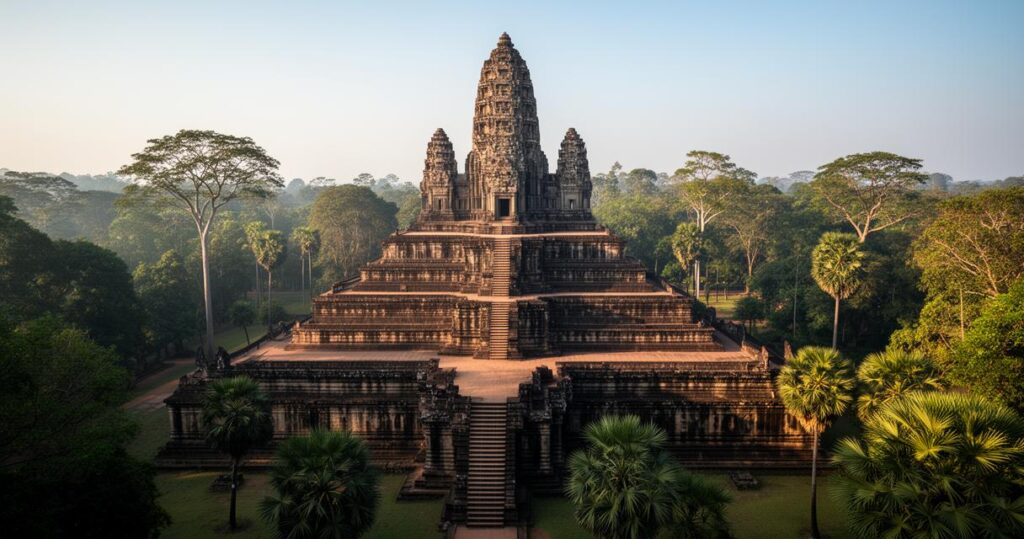
The ancient temples of Angkor have long captured the imagination of explorers, historians, and conservationists alike. Among these magnificent structures, the Baphuon temple stands as a testament to the ingenuity and spiritual devotion of the Khmer civilisation. A remarkable documentary broadcast on Planete invites viewers on a journey through time, unveiling the painstaking efforts of scientists and universities to restore this architectural marvel. Set against the lush backdrop of Siem Reap's forests, the film chronicles the extraordinary adventure of uncovering and reassembling a temple that had lain in ruins for decades. This narrative is not merely about stones and structures; it is about safeguarding a cultural legacy that speaks to the enduring spirit of Cambodia.
The Historical Significance of Baphuon Temple and Its Place in Khmer Civilisation
Ancient origins: understanding baphuon's role in angkor's sacred landscape
Baphuon temple occupies a central position within the sprawling complex of Angkor, a city that once served as the heart of the Khmer Empire. Constructed during the eleventh century under the reign of King Udayadityavarman II, the temple was dedicated to the Hindu god Shiva and functioned as a state temple embodying the cosmic mountain, Mount Meru. This sacred geography was not arbitrary; it reflected the Khmer understanding of the universe, where the temple mountain served as an earthly representation of the divine realm. The Baphuon's location within the royal palace enclosure underscores its importance as a spiritual and political symbol, anchoring the authority of the monarch within a cosmological framework that governed daily life and religious practice.
The temple's design integrated seamlessly into the sacred landscape of Angkor, where water reservoirs, causeways, and other monuments formed a harmonious whole. Pilgrims and priests traversed these pathways, engaging in rituals that reinforced the connection between the heavens and the earth. Over centuries, as dynasties rose and fell, the Baphuon remained a focal point of devotion, its towering presence a constant reminder of the empire's grandeur. Yet, the passage of time and the ravages of conflict would eventually lead to its gradual decline, setting the stage for one of the most ambitious restoration projects in modern archaeology.
Architectural Brilliance: Decoding the Symbolic Design of the Temple Mountain
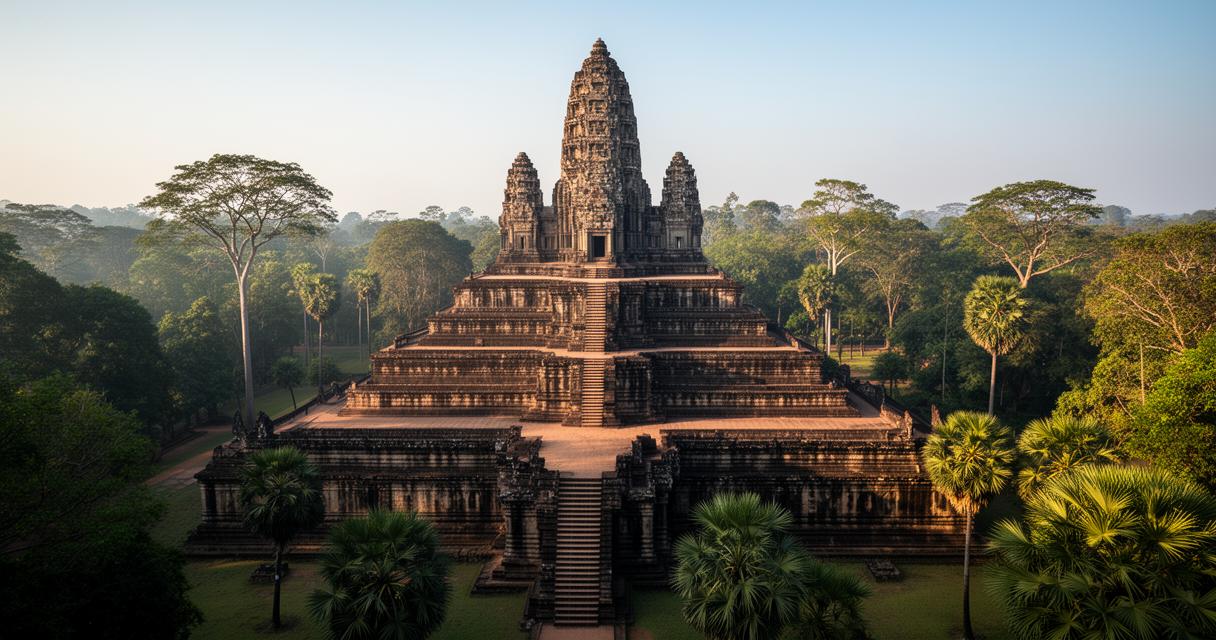
The Baphuon is a masterpiece of Khmer architecture, a three-tiered pyramid that rises majestically above the jungle floor. Its design reflects profound cosmological symbolism, with each level representing a stage in the ascent toward spiritual enlightenment. Intricate carvings adorn the sandstone surfaces, depicting scenes from Hindu mythology and daily life, offering insights into the beliefs and practices of the Khmer people. The temple's construction required not only technical skill but also a deep understanding of geometry and religious philosophy, as architects sought to create a structure that was both aesthetically pleasing and spiritually potent.
One of the most striking features of the Baphuon is the reclining Buddha added in later centuries, during a period when Buddhism began to supplant Hindu worship in the region. This addition, carved into the western side of the temple, demonstrates the adaptability of sacred spaces and the layering of religious identities over time. The sandstone blocks, meticulously cut and fitted without mortar, exemplify the advanced engineering techniques employed by Khmer builders. However, the very precision that made the Baphuon a marvel also complicated its eventual restoration, as each stone had to be returned to its exact original position to preserve the integrity of the design.
The Monumental Restoration Project: French Scientists and Universities Unite to Rebuild Baphuon
The Great Puzzle: Reassembling Thousands of Stone Blocks After Decades of Conflict
By the mid-twentieth century, the Baphuon had become a victim of both natural decay and the turmoil of war. The temple's collapse was accelerated by structural weaknesses and the encroachment of vegetation, which gradually dislodged the massive stones. In the nineteen sixties, a team of French archaeologists initiated a restoration project, carefully dismantling the structure and cataloguing each block with the intention of rebuilding it using modern conservation techniques. However, the outbreak of civil conflict and the rise of the Khmer Rouge regime in the nineteen seventies brought the work to an abrupt halt. The meticulous records and plans were lost, leaving behind a field of scattered stones that resembled an impossibly complex jigsaw puzzle.
When peace finally returned to Cambodia, the challenge of reassembling the Baphuon seemed almost insurmountable. Thousands upon thousands of sandstone blocks lay strewn across the site, their original positions obscured by decades of neglect. French scientists, driven by a commitment to preserving Khmer heritage, resumed the project in the late nineteen nineties. Armed with advanced technology and a renewed sense of purpose, they embarked on the painstaking task of identifying and repositioning each stone. The adventure was fraught with difficulties, from deciphering the structural logic of the ancient builders to contending with the tropical climate that threatened the delicate conservation work. Yet, through perseverance and collaboration, the team gradually brought the temple back to life, restoring its former glory and ensuring that future generations could marvel at its splendour.
Academic Collaboration: How International Universities Contributed to the Conservation Effort
The restoration of the Baphuon was not the work of a single institution or nation; it was a truly international endeavour that brought together scholars, engineers, and conservationists from universities and research centres around the world. French institutions played a leading role, drawing on their long history of archaeological engagement in Southeast Asia. However, the project also benefited from the expertise of specialists in fields ranging from structural engineering to art history, each contributing unique insights that enriched the overall effort. Universities provided not only intellectual resources but also training opportunities for Cambodian students and professionals, fostering a new generation of heritage custodians committed to safeguarding their cultural legacy.
This collaborative spirit extended beyond the technical aspects of restoration. Conferences and academic forums became vital platforms for sharing knowledge and debating the best approaches to conservation. Videos documenting the progress of the project were disseminated widely, raising awareness of the challenges faced by those working to protect Angkor's monuments. These efforts underscored the importance of international cooperation in addressing heritage preservation, demonstrating that cultural treasures belong not to any single nation but to humanity as a whole. The Baphuon project thus became a model for future conservation initiatives, illustrating how science, education, and cultural diplomacy can combine to achieve remarkable outcomes.
Preserving Cambodia's Cultural Legacy: Lessons from Baphuon for Future Generations
Documenting the Adventure: Videos and Conferences Bringing Khmer Heritage to the World
The story of the Baphuon restoration has been captured in a wealth of visual and textual documentation, ensuring that the lessons learned will endure long after the scaffolding has been removed. Videos produced during the project offer a behind-the-scenes look at the meticulous work involved in reassembling the temple, from the initial surveys to the final placement of the capstones. These films are more than mere records of technical achievement; they are narratives of human determination and ingenuity, celebrating the dedication of those who refused to let a cultural treasure slip into oblivion. By making these resources accessible to a global audience, the project organisers have helped to foster a deeper appreciation for Khmer architecture and the complexities of heritage conservation.
Conferences dedicated to the Baphuon and other Angkor monuments have provided forums for scholars to present their findings and engage in critical dialogue. These gatherings have addressed a wide range of topics, from the archaeological methodologies employed during the restoration to the ethical considerations surrounding intervention in ancient sites. By bringing together experts from diverse disciplines and cultural backgrounds, such events have enriched the discourse on heritage preservation and highlighted the interconnectedness of past and present. The legacy of the Baphuon adventure thus extends far beyond the physical structure, inspiring ongoing research and advocacy aimed at protecting the world's cultural heritage.
Safeguarding siem reap's treasures: the ongoing challenge of protecting angkor's monuments
While the restoration of the Baphuon represents a monumental achievement, it also serves as a reminder of the ongoing challenges faced in preserving the monuments of Angkor. The temples of Siem Reap continue to contend with threats ranging from environmental degradation to the pressures of tourism. The dense forests that once shielded these structures from view now pose a risk as tree roots infiltrate the masonry, while the humid tropical climate accelerates the erosion of sandstone surfaces. Balancing the need for public access with the imperative of conservation remains a delicate task, requiring constant vigilance and innovative solutions.
The success of the Baphuon project offers valuable insights into how these challenges can be addressed. It demonstrates the importance of long-term commitment, interdisciplinary collaboration, and the integration of traditional craftsmanship with modern technology. As Cambodia continues to develop economically and socially, the stewardship of its cultural heritage must remain a priority. Education and community engagement are essential components of this effort, empowering local populations to take pride in and responsibility for their historical legacy. The adventure of the Baphuon is far from over; it is an ongoing journey that calls upon scientists, universities, and all who cherish the past to work together in safeguarding these irreplaceable treasures for the generations yet to come.